Quick Summary: GLP-1 medications like Wegovy and Ozempic can help patients lose significant weight, but bariatric surgery remains the most effective long-term treatment for severe obesity. While weight-loss injections often require lifelong use to maintain results, bariatric procedures such as gastric sleeve and gastric bypass create lasting metabolic changes that typically produce greater and more durable weight loss, along with higher rates of Type 2 diabetes remission.
For years, the path toward significant weight loss was relatively straightforward, though never easy. It involved a rigorous commitment to lifestyle changes, and for those facing severe health risks, bariatric surgery stood as the gold standard for lasting transformation. Today, however, the landscape has shifted dramatically. If you have been following the news or scrolling through social media lately, you have undoubtedly heard the names Ozempic, Wegovy, and Mounjaro.
The rapid rise of GLP-1 medications has created a new dilemma for individuals struggling with chronic obesity. You may find yourself at a confusing crossroads, asking the question that so many are grappling with: “Should I just take the new weight-loss shots instead of having surgery?”
At Sabir Bariatrics, we understand that this isn’t just a medical question—it is a deeply personal struggle. You want a solution that works, but you also want to make the right choice for your future self.
The Internal Struggle: Searching for the “Right” Way
The internal conflict is real. On one hand, the idea of a weekly injection sounds far less daunting than a surgical procedure. It may seem like a simpler alternative that might finally solve a lifelong struggle. On the other hand, you may worry about the “forever” nature of these medications. Will you have to take them for the rest of your life? What happens if the insurance coverage changes or the side effects become unmanageable?
The frustration often stems from years of “yo-yo” dieting, where every pound lost eventually found its way back. You are tired of temporary fixes. You are looking for a more durable solution to the cycle of weight regain, and you need to know which tool gets you there effectively.
Understanding the GLP-1 Phenomenon
GLP-1 (glucagon-like peptide-1) receptor agonists like Wegovy and Ozempic work by mimicking a hormone that targets areas of the brain that regulate appetite and food intake. They slow down gastric emptying, making you feel fuller longer. There is no denying their effectiveness; many patients see a 15% to 20% reduction in total body weight.
However, the “success” of these medications comes with a specific set of fine print. Clinical data suggests that for the vast majority of people, these are chronic-use medications. When the shots stop, the hunger returns, and the weight often follows. Furthermore, for some, the gastrointestinal side effects or the long-term cost—both financial and physiological—can become significant hurdles.
Why Bariatric Surgery Remains the Gold Standard
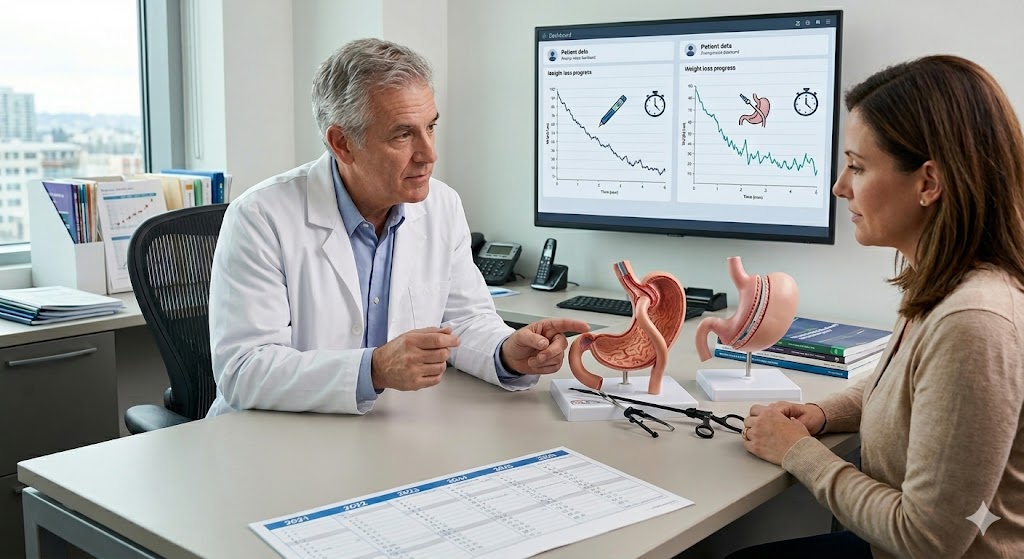
Bariatric surgery, such as the Gastric Sleeve or Gastric Bypass, is not simply a mechanical “shrinking” of the stomach. It is a profound metabolic intervention. By physically altering the digestive system, surgery changes the signals your gut sends to your brain regarding hunger, fullness, and even blood sugar regulation.
The primary differentiator for surgery is its durability. Research consistently shows that surgical patients typically achieve a 25% to 35% loss of total body weight—significantly higher than medication alone—and are much more likely to maintain that loss over a decade or more. For individuals dealing with life-threatening comorbidities like Type 2 diabetes, severe sleep apnea, or high blood pressure, the metabolic “reset” provided by surgery often leads to a higher rate of total remission.
Comparison: Medications vs. Surgery
When comparing these two paths, it is helpful to look at the overall commitment required for each:
- Sustainability: GLP-1 medications generally require a lifelong commitment to weekly injections to maintain results. Surgery is a one-time physical change that provides a permanent metabolic shift.
- Weight Loss Magnitude: While medications are a massive leap forward from previous diet pills, surgery still offers the most significant and consistent weight loss for those with a high BMI.
- Metabolic Health: Both options improve heart health and insulin sensitivity, but surgery has a strong track record of helping patients achieve lasting remission of Type 2 diabetes.
- American Society for Metabolic and Bariatric Surgery (ASMBS) recommendation:
| BMI / Condition | ASMBS Recommendation for Bariatric Surgery |
| BMI ≥ 35 | Recommended regardless of comorbidities |
| BMI ≥ 30 with Type 2 diabetes | Recommended |
| BMI 30 – 34.9 with failed non-surgical treatments | Should be considered |
Note: Both GLP-1 medications and bariatric surgery require long-term lifestyle changes, nutritional guidance, and medical follow-up for optimal success.
A Partnership for Your Long-Term Success
You shouldn’t have to navigate these complex medical options alone. The surge in “weight loss shots” hasn’t made bariatric surgery obsolete; rather, it has expanded the toolbox we have to help you. In some cases, these medications are used in tandem with surgery to optimize results. The key is finding the specific plan that fits your biology, your lifestyle, and your lasting health goals.
Sabir Bariatrics is led by Dr. Mubashir Sabir, a board-certified bariatric surgeon affiliated with Henry Ford Health. With over 20 years of surgical experience, he specializes in minimally invasive and robotic bariatric procedures for patients across Metro Detroit and Southeast Michigan.
Dr. Sabir takes a comprehensive, patient-centered approach to weight loss and metabolic health. When appropriate, he may recommend non-surgical options for obesity and related conditions alongside surgical solutions. Our role is to help you move beyond the confusion of changing weight loss trends and toward a clear, personalized plan designed for lasting results.
The goal is simple: to help you reclaim your health, restore your energy, and move forward with greater confidence.
Reclaim Your Future
The emotional burden of uncertainty can feel just as overwhelming as the physical challenges of obesity. You deserve a solution designed not just for the next few months, but for a healthier and more sustainable future. Whether that path involves advanced weight loss medications, bariatric surgery, or a combination of both, the first step is a conversation guided by expertise and clarity.
Stop second-guessing your options and start building a personalized roadmap to success with a team focused on lasting health transformation.
Find the Weight Loss Approach That Fits Your Lasting Health Goals
Speak with Dr. Mubashir Sabir, a trusted bariatric specialist serving patients across Metro Detroit, including Novi and Madison Heights.
Sabir Bariatrics
Address: 28455 Haggerty Rd #203, Novi, MI 48377, United States
Phone: +1 248-974-1584
Website: https://sabirbariatrics.com/
Email: sabir.bariatrics@gmail.com
Frequently Asked Questions
1. Is bariatric surgery more effective than GLP-1 medications like Ozempic or Wegovy?
Bariatric surgery typically produces greater and more durable long-term weight loss than GLP-1 medications alone. While medications like Wegovy and Ozempic can help patients lose 15–20% of total body weight, bariatric procedures such as gastric sleeve or gastric bypass often result in 25–35% total body weight loss with stronger long-term maintenance and metabolic improvement.
2. Do patients regain weight after stopping GLP-1 medications?
Many patients regain weight after discontinuing GLP-1 medications because appetite and hunger signals often return once treatment stops. Long-term success with medications usually requires ongoing therapy combined with lifestyle changes and medical supervision.
3. Can GLP-1 medications replace bariatric surgery?
GLP-1 medications can help many patients lose weight, but they do not fully replace bariatric surgery for individuals with severe obesity or obesity-related conditions like Type 2 diabetes or sleep apnea. Bariatric surgery remains the most effective long-term treatment for significant and sustained weight reduction.
4. Who qualifies for bariatric surgery?
Most patients may qualify for bariatric surgery if they have a BMI of 40 or higher, or a BMI of 35+ with obesity-related health conditions such as diabetes, hypertension, or sleep apnea. A bariatric specialist can determine candidacy through a full medical evaluation.
5. Is bariatric surgery safer than people think?
Modern bariatric surgery is considered very safe when performed by experienced, board-certified bariatric surgeons. Minimally invasive and robotic techniques have significantly improved recovery times and reduced complication risks compared to older surgical methods.
6. Can bariatric surgery help reverse Type 2 diabetes?
Yes. Bariatric surgery can significantly improve blood sugar control and, in many cases, lead to long-term remission of Type 2 diabetes. Gastric bypass surgery especially has shown strong metabolic benefits beyond weight loss alone.
7. Can GLP-1 medications and bariatric surgery be used together?
Yes. In some cases, bariatric specialists may combine GLP-1 medications with surgery before or after a procedure to improve weight loss outcomes, reduce surgical risks, or help patients maintain long-term results.